

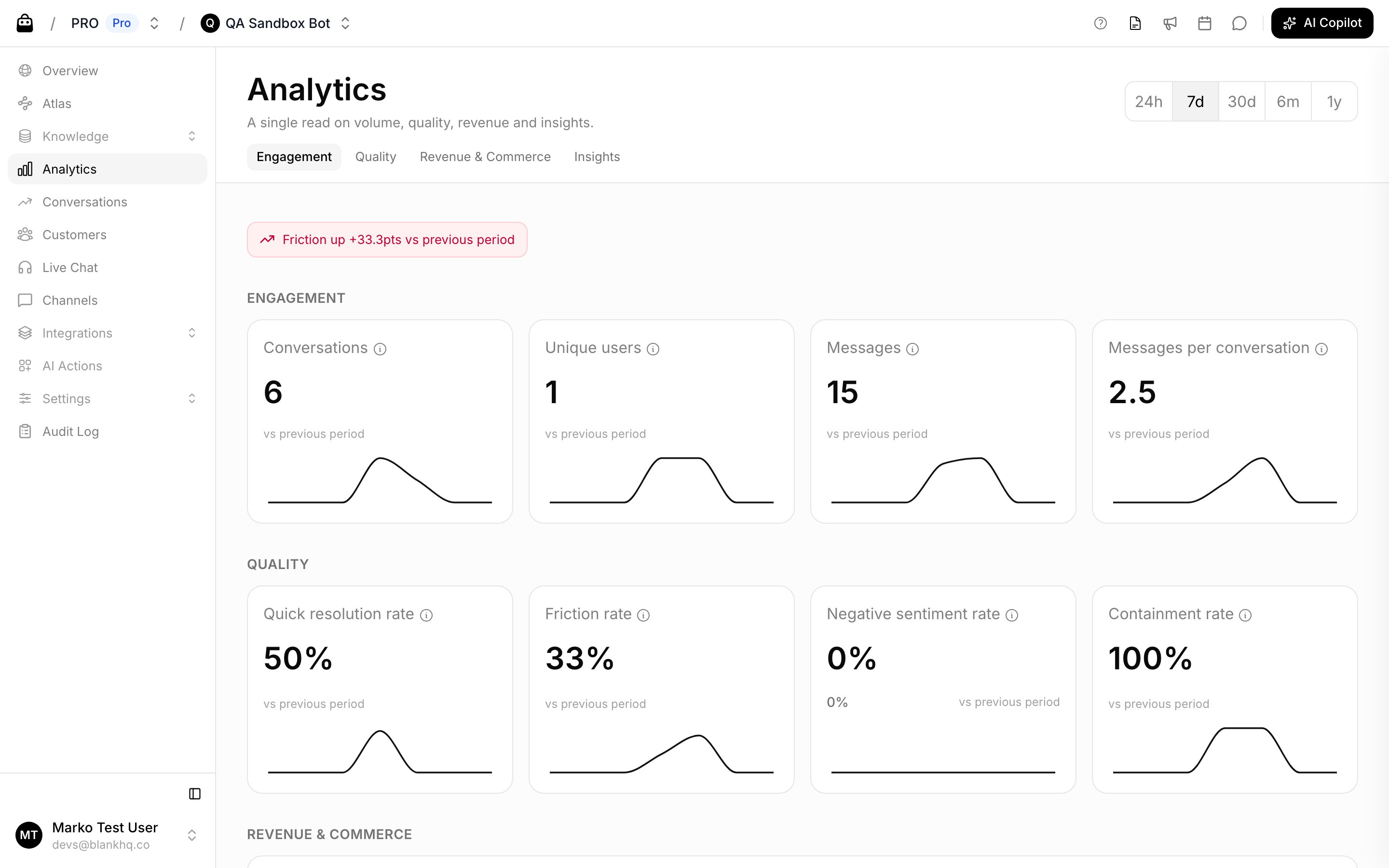
Engagement
Volume metrics for the selected period:- Conversations: total conversations.
- Unique users: number of individual users who interacted with the agent.
- Messages: total messages exchanged.
- Messages per conversation: average conversation length.
Quality
How well the agent handles conversations on its own:- Quick resolution rate: share of conversations resolved in a few messages.
- Friction rate: share of conversations where users showed signs of frustration.
- Negative sentiment rate: share of conversations with negative sentiment.
- Containment rate: share of conversations the agent handled without human help.
Revenue & Commerce
If a Shopify or WooCommerce store is connected, this section shows the agent’s business impact:- Products added to cart: products added after an AI-assisted interaction.
- Checkout starts: checkouts initiated through the agent. (This does not equal completed purchases.)
- Revenue generated: total revenue attributed to purchases initiated through Totebot conversations, with a daily breakdown.
Insights
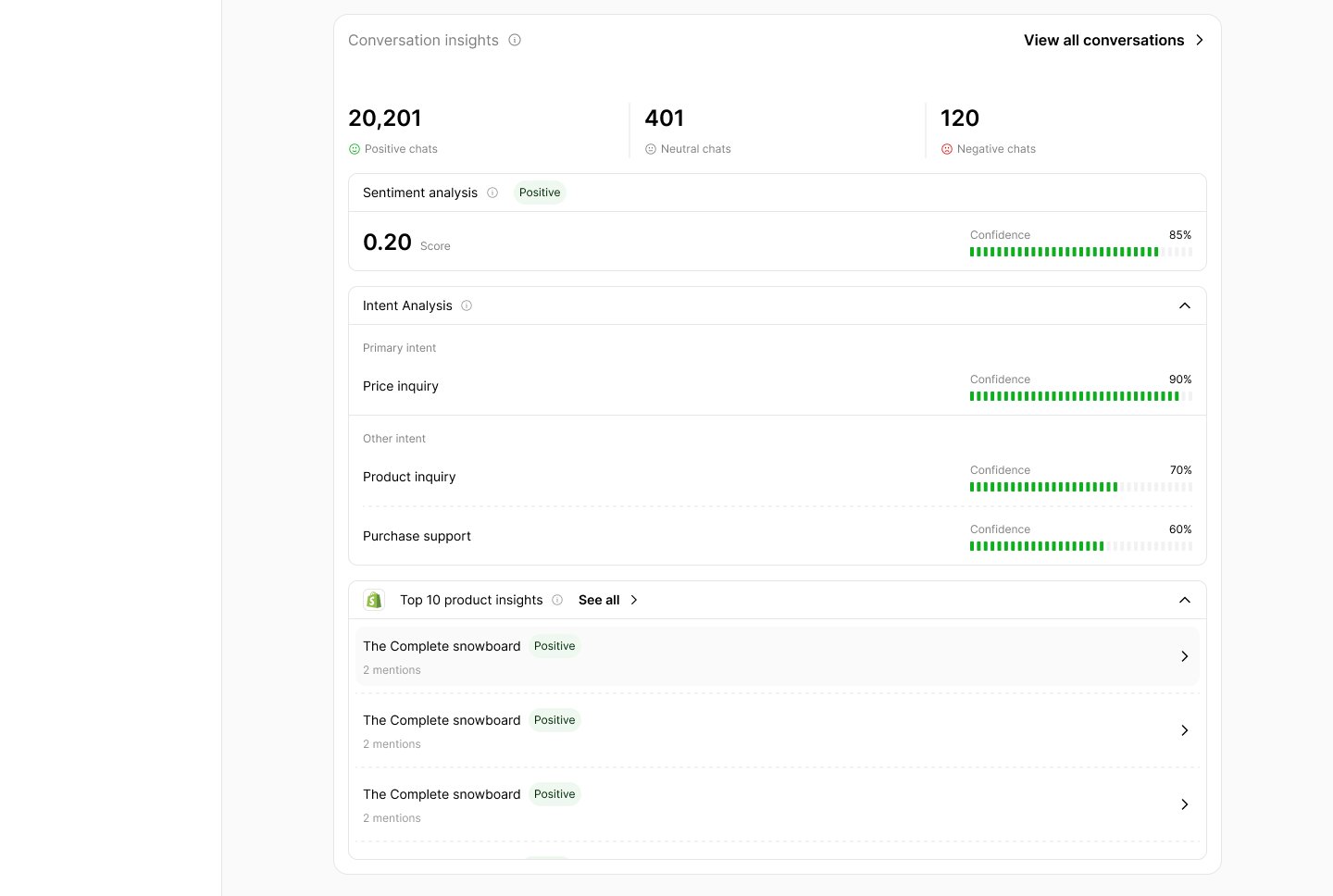
- Sentiment analysis: the emotional tone behind user messages.
- Intent analysis: the core purpose behind each conversation (product inquiry, pricing, support), with a confidence score.
- Top questions: common customer questions grouped by similarity.
- Product insights: the products mentioned most frequently in conversations, with sentiment and context.
Insights are available on the Pro and Scale plans.